

 Current position > Product detail
『Refrigerant Flow Meter Repeatability: Eliminating Sensor Shift for Consistent Test Data』Related information(v cone flow meter|rotary gas meter|gallon meter|gear meter|metal tube rotameter|glass tube rotameter|nutating disk meter|transit time ultrasonic flow meter|wedge flow meter|pd meters|hydraulic flow meter|ultrasonic water flow meter|water flow meter|air flow meter|magnetic water flow meter|oxygen flow meter|gas flow meter|argon flow meter|air velocity meter|gasoline flow meter|fuel flow meter|ultrasonic water meter|digital water meter|nitrogen flow meter|solid flow meter|Oxygen tank flow meter|digital water flow meter|diesel fuel flow meter|steam flow meter|02 flow meter|compressed air flow meter|oil flow meter|liquid flow meter)

Refrigerant Flow Meter Repeatability: Eliminating Sensor Shift for Consistent Test Data
Quick Answer: Sensor shift degrades refrigerant flow meter repeatability and ruins test data integrity. The root causes are usually thermal stress, installation strain, or zero drift in Coriolis meters. Fixing these with active zero stability algorithms, proper warm-up cycles, and stress-free mounting restores consistent results. Silver Instruments offers Coriolis meters with built-in proactive shift compensation that keeps repeatability at ±0.05% or better.
Why Repeatability Matters in Refrigerant Flow Measurement
Test engineers in refrigeration, heat pump, and chiller labs cannot tolerate scatter in their data. A refrigerant mass flow meter that passes calibration today and reads 0.5% high tomorrow breaks the trust in entire test campaigns.
Repeatability is often more critical than absolute accuracy. In a refrigerant test bench, you compare performance before and after a component change. If the flow meter shifts by 0.2%, you cannot tell whether the system improved or the meter drifted.
We have seen labs scrap weeks of data because a sensor shift went undetected. This is not a hypothetical problem. It hits facilities from Melbourne to Monterrey.
Understanding Sensor Shift in Coriolis Meters
Coriolis mass flow meters are the preferred instrument for refrigerant mass flow because they measure direct mass, density, and temperature in one device. They work with R134a, R410A, R1234yf, and transcritical CO2. No moving parts, no upstream straight runs in many cases.
But Coriolis sensors do have one weak point. The phase shift measurement between the two vibrating tubes is extremely sensitive. Tiny mechanical changes inside the sensor translate into a zero offset shift. In practice, a zero shift of just 0.01% of full scale can ruin repeatability on a DN15 meter measuring 20 kg/h.
Most engineers skip this part. They fix the sensor zero at installation and assume it stays put. In refrigerant test cells, it does not. Ambient temperature swings, process fluid temperature changes, and pipe vibration slowly push the zero off. This is sensor shift.
Root Causes of Sensor Shift
We have analysed hundreds of field cases across Southeast Asia, the Middle East, and Latin America. Three causes dominate.
Thermal stress: A refrigerant loop alternates between -20°C and 60°C. The sensor body expands and contracts. Even with temperature compensation, the zero can wander if the sensor material has residual stress.
Installation strain: Pipe misalignment, over-tightened flanges, or a heavy unsupported pipe cantilever the sensor. The mounting stress distorts the tube geometry and alters the baseline phase difference.
Coating or two-phase flow: Oil carryover from a compressor or flash gas bubbles hitting the tubes at partial evaporation creates asymmetric damping. The sensor interprets this as a flow signal. A low bubble fraction can add 0.1% repeatability error that looks exactly like a shift.
How to Eliminate Sensor Shift
In practice, you need a layered strategy. One quick fix is not enough.
First, demand active zero stability control from your meter supplier. The transmitter should continuously monitor the sensor resonance and apply a dynamic zero correction without interrupting the measurement. Silver Instruments implements a Micro Zero Check that runs in the background and adjusts drift of 0.02% in real time.
Second, enforce a warm-up protocol. A Coriolis meter placed in a test bench must reach thermal equilibrium for at least 30 minutes. The densitom
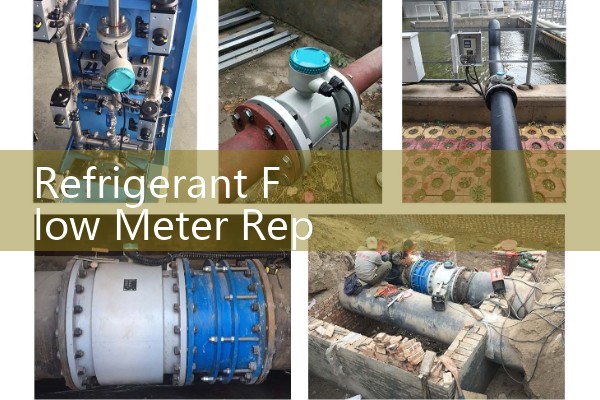
Third, decouple pipe stress. Use flexible hoses, instrument-class tubing supports, and align flanges to within 0.5 mm. A DN10 or DN15 refrigerant meter weighs around 6 kg. It cannot carry the weight of 2 metres of copper pipe.
Fourth, in refrigerant applications with potential oil mist, install a coalescing filter upstream. A small filter protects the sensor tubes and keeps the damping balanced. This one change stopped repeatability drift for a chiller manufacturer in Thailand we worked with last year.
Real-World Example
A paint and chemical plant in Vietnam used a Coriolis meter to dose liquid refrigerant into a reactor jacket. Flow range was 15 to 80 kg/h on a DN10 line. Pressure 28 bar, temperature 5°C. The operator noticed the mass totaliser drifted 0.3% each week. They recalibrated every Monday.
The root cause was a combination of pipe strain and cold-induced contraction. We replaced the meter body with a model that has a flexible secondary pressure containment and recommended a support bracket. After installation, repeatability over 30 days stayed within ±0.06% of reading. The lab stopped the weekly zero adjustment.
What Silver Automation Instruments Recommends
For refrigerant test benches, we usually supply a dedicated Coriolis refrigerant mass flow meter with built-in density and temperature output. Model size from DN10 to DN25 covers most lab and pilot plant needs. The transmitter provides 4-20 mA HART, Modbus RTU, and pulse output. Repeatability is guaranteed at ±0.05% of rate under stable conditions and ±0.1% over a wide temperature band.
The meter arrives with a factory zero performed at three temperatures to map the shift curve. You get a certificate showing the residual zero error at each point.
FAQ
Q: What flow meter type gives the best repeatability for refrigerant mass flow?
A: A Coriolis mass flow meter with active zero control. It achieves ±0.05% to ±0.1% repeatability even with temperature swings.
Q: How often should I zero a refrigerant flow meter in a test cell?
A: With a stable sensor and no strain, zero check every 6 months is enough. With older meters, we suggest a monthly zero verification using a blocked-in condition. If the drift exceeds 0.02% of full scale, re-zero immediately.
Q: Can sensor shift be eliminated completely?
A: Not 100%, but you can reduce it below the noise floor of your measuring equipment. Proper mounting, thermal stabilisation, and a smart transmitter get you close.
Q: Does Silver Instruments provide refrigerant-capable meters with active shift compensation?
A: Yes. We have models for R290 (propane), R744 (CO2), ammonia, and standard HFC blends. The meter wetted parts can be 316L stainless steel or Hastelloy for corrosive refrigerants.
Q: What information do you need to quote a refrigerant flow meter?
A: Send us your refrigerant type, pressure (bar), temperature range (min/max °C), pipe size (DN), and the maximum and minimum mass flow rate (kg/h).
Get a Quote for Your Refrigerant Flow Application
Send us your pressure, temperature, pipe size, and flow range. Our engineers will propose a Coriolis meter sized to hold repeatability within your test uncertainty budget.
Email: [email protected]
Tel: +86-25-68650347
Whatsapp: +86-25-52155837
WeChat: +86 15365082610
Learn more about our Coriolis mass flow meters at https://flow-meter.com.au