

『Flow Transmitter Vs Flow Meter: Differentiating Raw Sensor Output Converters from Integrated Measuring Sets』Related information(v cone flow meter|rotary gas meter|gallon meter|gear meter|metal tube rotameter|glass tube rotameter|nutating disk meter|transit time ultrasonic flow meter|wedge flow meter|pd meters|hydraulic flow meter|ultrasonic water flow meter|water flow meter|air flow meter|magnetic water flow meter|oxygen flow meter|gas flow meter|argon flow meter|air velocity meter|gasoline flow meter|fuel flow meter|ultrasonic water meter|digital water meter|nitrogen flow meter|solid flow meter|Oxygen tank flow meter|digital water flow meter|diesel fuel flow meter|steam flow meter|02 flow meter|compressed air flow meter|oil flow meter|liquid flow meter)
Flow Transmitter Vs Flow Meter: Differentiating Raw Sensor Output Converters from Integrated Measuring Sets
Quick Answer: A flow transmitter is the electronics section that converts a raw sensor signal into a standard output like 4-20 mA HART or pulse. A flow meter is usually the complete measuring device with the sensor element and transmitter built into one body. If your RFQ asks for a flow transmitter only, you may receive an output board plus housing. If you ask for a flow meter, you should receive the full inline measuring set.
In practice, the two terms are mixed on many job sites. A maintenance supervisor in Malaysia might call the electronic head of a magnetic flow meter a transmitter. A project engineer in Chile might write flow meter on the bill of materials but actually need a complete device with flanges, liner, electrodes, display, and 4-20 mA HART output. This article separates the two terms for purchase and integration decisions.
What a Flow Transmitter Does on a Skid
A flow transmitter sits between the primary sensing element and the control system. It receives a raw signal such as millivolt from a magnetic flow tube, frequency from a vortex shedding bar, or resistance from a thermal mass sensor. It conditions that signal into a standard output. Most process sites use 4-20 mA HART. Many also add pulse, RS485 Modbus, or a local display.
Here is the thing. A bare flow transmitter is not a measuring device. It is the output converter. If you buy a separate transmitter for an oval gear meter, you get no gears, no measuring chamber, and no process connection. The sensor body is a different part number. We have seen this on customer sites many times.
What a Complete Flow Meter Includes
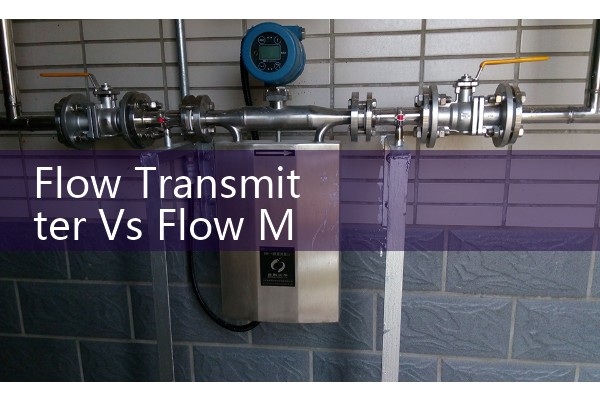
A complete flow meter includes the sensor element, process connections, converter or transmitter, and often a local display. For an electromagnetic flow meter, that means lined measuring tube, coils, electrodes, grounding rings, and the converter board. For a Coriolis mass flow meter, that means vibrating tubes, driver, pickups, and mass flow transmitter. The integrated set is tested and calibrated as one unit.
Example from a water utility in Vietnam. They ordered a DN100 seawater electromagnetic flow meter for a desalination plant intake. The device came with a rubber liner, stainless steel electrodes, an IP68 remote converter, 4-20 mA HART, and Modbus RTU. The installation team wired only two signal pairs and powered the loop from the PLC. That is the advantage of an integrated set.
Key Differences in RFQ Terms
The main RFQ risks are easy to avoid. When an RFQ says flow transmitter, confirm that the supplier includes the sensing element. A bare transmitter is just the electronics. When an RFQ says flow meter, check the output signal and whether a local display is included. Some low cost suppliers remove the display to cut price. For hazardous area installation, specify ATEX Zone 1 or Zone 2 and request the certificate. For batching or custody transfer, request multi variable output. A Coriolis mass flow meter can output mass flow, density, temperature, and totalized flow over HART.
Most engineers skip this part. A transmitter or meter with only a 4-20 mA output is enough for simple water flow indication. A mass balance application may need pulse plus Modbus and a separate PT100 input. Send us the full loop requirements before you buy.
Output Signals, Wiring, and Site Conditions
Silver Instruments flow meters and flow transmitters default to 4-20 mA HART. Pulse output works for totalizing and batching. RS485 Modbus RTU suits systems with many devices on one bus. Some units include PT100 inputs for temperature compensation on vortex and thermal mass flow meters. A 24 V DC supply from a PLC or barrier is enough for most installations.
In a chemical plant in Thailand, a dosing skid needed a Coriolis mass flow meter to measure resin at 1500 cP. The output included one 4-20 mA for mass flow, one 4-20 mA for density, and a pulse for total b
For conductive water and wastewater, select an electromagnetic flow meter sized from DN10 to DN3000. The minimum liquid conductivity is normally 5 µS/cm. For steam and gas, a vortex flow meter with PT100 temperature compensation gives a strong signal. For diesel, lube oil, and heavy fuels up to 2000 cP, choose an oval gear flow meter. For compressed air and biogas, a thermal mass flow meter reads mass flow directly in kg/h or Nm3/h.
Purchase Logic for OEMs and End Users
OEM panel builders often buy flow transmitters separately because they already have a sensor or mechanical meter body. An example is a paint manufacturer in Southeast Asia. They standardized on Silver Instruments oval gear flow meters for solvent batching. The units measure 2 to 100 L/min and send pulse output to a batch controller. The customer stocks two spare sensors and one transmitter as a common replacement part.
End users in water, food, chemical, and oil and gas usually need a complete flow meter. They do not want to match sensor signal types and calibrate the output. They want one tag number, one certificate, and one loop drawing. That is where a complete device saves time.
Recommended Silver Instruments Devices
Silver Automation Instruments is a flow meter manufacturer that supplies both integrated flow meters and separate flow transmitters. For water and wastewater, choose an electromagnetic flow meter from DN10 to DN3000 with rubber or PTFE liner. For direct mass flow of syrups, resins, oils, and compressed gases, choose a Coriolis mass flow meter with density and temperature output. For steam and gas, choose a vortex flow meter with pressure and PT100 compensation. For high viscosity liquids up to 2000 cP, choose an oval gear flow meter. For compressed air and biogas, choose a thermal mass flow meter. The pressure transmitter and paperless recorder lines support the same 24 V DC loop and HART architecture.
For a specific quote, contact Silver Instruments by phone at +86-25-68650347, by WhatsApp at +86-25-52155837, or by WeChat at +86 15365082610. Send us your pressure in bar, temperature in Celsius, pipe size in DN, and flow range. We will recommend a complete flow meter or a separate flow transmitter based on your site conditions.
FAQ: Flow Transmitter vs Flow Meter
1. Is a flow transmitter the same as a flow meter?
No. A flow transmitter is the output electronics. A flow meter is commonly the complete measuring device that includes the sensor and the transmitter in one body.
2. When should I buy a flow transmitter instead of a complete flow meter?
Buy a separate flow transmitter when you already have a sensor or mechanical meter body with a known raw signal. OEMs and panel builders do this often. If you need a process connection and a calibrated measuring element, buy the complete flow meter.
3. Does a magnetic flow meter include a transmitter?
Most magnetic flow meters from Silver Instruments are sold as complete units with an integrated or remote transmitter. You receive the measuring tube, liner, electrodes, and the converter. Specify whether you need compact or remote mounting.
4. What output signals should I request for a flow transmitter?
Request 4-20 mA HART as the minimum. Add pulse for totalizing, RS485 Modbus for bus systems, and PT100 input when temperature compensation is required. For hazardous areas, request ATEX Zone 1 or Zone 2 certification in writing.
5. Can Silver Instruments supply both flow meters and separate flow transmitters?
Yes. Silver Instruments supplies integrated flow meters, replacement transmitters, and matching sensors for electromagnetic, Coriolis, vortex, oval gear, and thermal mass flow measurement. Contact us with your pipe size and process data for a specific part number.
 Hot Blog
 Related AD