

『Flow Meter Upstream Downstream Lengths Reference: 10D and 5D Straight Pipe Run Guidelines』Related information(v cone flow meter|rotary gas meter|gallon meter|gear meter|metal tube rotameter|glass tube rotameter|nutating disk meter|transit time ultrasonic flow meter|wedge flow meter|pd meters|hydraulic flow meter|ultrasonic water flow meter|water flow meter|air flow meter|magnetic water flow meter|oxygen flow meter|gas flow meter|argon flow meter|air velocity meter|gasoline flow meter|fuel flow meter|ultrasonic water meter|digital water meter|nitrogen flow meter|solid flow meter|Oxygen tank flow meter|digital water flow meter|diesel fuel flow meter|steam flow meter|02 flow meter|compressed air flow meter|oil flow meter|liquid flow meter)
Flow Meter Upstream Downstream Lengths Reference: 10D and 5D Straight Pipe Run Guidelines
Quick Answer
Install most industrial flow meters with at least 10D of straight pipe upstream and 5D downstream. D means the nominal pipe diameter. For a DN100 line, that is 1000 mm of straight pipe before the meter and 500 mm after the meter. This rule reduces swirl and velocity profile error on velocity based flow meters.
Why Straight Pipe Run Matters
A flow meter assumes a stable velocity profile at the measuring point. A single elbow disturbs that profile. A partially open gate valve does the same. A pump discharge adds swirl. Without enough straight run, the meter produces a reading that is not repeatable. We have seen this same offset on customer sites many times. A water treatment plant in Indonesia installed a DN150 electromagnetic flow meter 4D after an elbow. The flow total was about 2.5 percent higher than the reference tank level over one week.
The 10D upstream and 5D downstream rule is not a universal guarantee. Some meter types need more straight pipe. Some need less. But the ratio is a good field reference for DN15 to DN300 process lines.
Straight Run Needs by Flow Meter Type
Electromagnetic flow meters usually need 10D upstream and 5D downstream for clean water and wastewater service. If the line has a control valve upstream, use 15D or move the meter upstream of the valve. For a DN40 acid dosing line in a Vietnam paint plant, we recommended a PTFE lined electromagnetic flow meter with 10D of clear pipe before the unit.
Ultrasonic flow meters can be more sensitive to swirl. Clamp-on transit time models often need 15D upstream and 5D downstream for a fully developed profile. Inlet straight run matters more on gas lines because gas velocity profiles distort easily.
Vortex flow meters need stable flow to create proper shedding. Use 15D upstream and 5D downstream after a single elbow. Use 20D to 30D upstream when the pipe has a partially open valve or two elbows in different planes. A steam header in a Malaysian palm oil refinery should have no shorter than 20D before a DN80 vortex flow meter.
Coriolis mass flow meters do not require long straight runs in most cases. A DN25 Coriolis meter for molasses or palm oil can often work with 3D to 5D of clear pipe upstream. The meter is insensitive to flow profile but installation stress and pipe support matter more. Use solid brackets and avoid pipe strain on the sensor.
Oval gear flow meters need almost no straight run upstream or downstream. A DN15 oval gear flow meter for diesel fuel dispensing can be installed directly after a nozzle or a pump. The main concern is clean fluid and proper strainers.
Thermal mass flow meters need moderate straight run. For compressed air or biogas, use 10D upstream and 5D downstream as a minimum. Insertion probes should be positioned away from the pipe wall and not in a dead flow zone.
Installation Details Engineers Often Skip
Most engineers skip these details. A straight pipe length is measured from the inside of the meter body or the electrode plane. D means the actual pipe inner diameter, not the outside diameter. A DN50 schedule 80 pipe has a smaller inside diameter than a DN50 schedule 40 pipe. Using the wrong D changes the physical length on site.
Gasket and weld alignment also create errors. A misaligned gasket can trip an electromagnetic flow meter or cause a vortex meter to read low. Use centering rings and check the inside surface before installation. On a food grade batching skid in Australia, a DN25 oval gear meter read 1.8 percent low because a gasket protruded into the flow path.
Temperature and pressure transmitters help but they do not replace straight pipe. A 4-20 mA HART pressure transmitter and a PT100 temperature sensor can correct density for gas or steam. They cannot correct swirl caused by two elbows in different planes. For saturated steam at 10 bar and 180 °C, a DN80 vortex flow meter with 4-20 mA HART output needs a PT100 sensor for compensation. A typical flow range is 400 kg/h to 4000 kg/h.
For deionized water with conductivity below 5 µS/cm, an electromagnetic flow meter is not the right choice. Use an ultrasonic
How to Apply 10D and 5D in Tight Pipe Runs
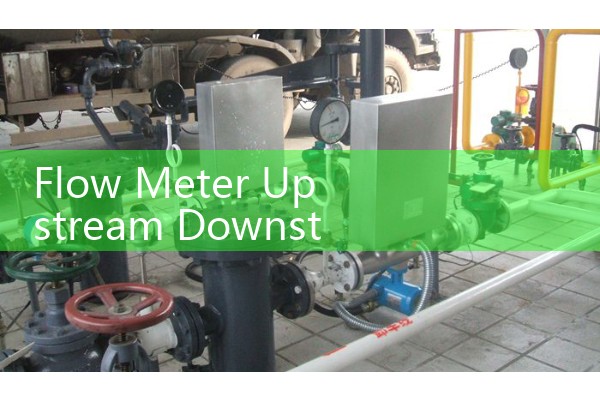
In practice, many pump skids do not have 10D of space. Before you shorten the straight run, check the upstream obstruction. A fully open ball valve creates less disturbance than a partially open butterfly valve. A single elbow creates less swirl than two elbows in different planes. If the actual space is 7D and the disturbance is a single elbow, a flow conditioner may help but adds pressure drop. For a DN100 cooling water line in a Saudi Arabia HVAC plant, a flow conditioner allowed a 6D upstream run and the electromagnetic flow meter held ±0.5 percent of rate.
A more reliable option is to change the meter type. A Coriolis mass flow meter or an oval gear flow meter can solve a tight piping problem quickly. The cost may be higher. The straight run requirement drops and the measurement uncertainty drops too.
Recommended Meter Options for 10D and 5D Installations
Silver Automation Instruments supplies flow meters from DN3 to DN2000 for oil and gas, water and wastewater, chemical, food and beverage, and marine applications. For standard 10D and 5D piping, choose an electromagnetic flow meter for water and chemicals. Choose a vortex flow meter for steam and gas. Choose a thermal mass flow meter for compressed air and biogas. For tight piping or high accuracy liquid batching, choose a Coriolis mass flow meter or an oval gear flow meter.
A seawater desalination plant in the Middle East recently ordered DN80 and DN150 electromagnetic flow meters from Silver Instruments. The feed water conductivity was 48 000 µS/cm. The customer installed the meters with 10D straight pipe before each unit and 5D after. The plant reported less than 1 percent deviation from the daily production log over two months.
For hydrocarbon flow, a distributor in Mexico uses DN25 oval gear flow meters for diesel and light oil. The meters sit directly after a pump on a skid with only 2D of clear pipe. The pulse output connects to a Silver Instruments paperless recorder for daily batch totals. This setup works because positive displacement meters do not need 10D upstream.
FAQ: 10D and 5D Straight Pipe Run Guidelines
What does 10D and 5D mean? D is the nominal pipe diameter. 10D upstream means 10 times the pipe diameter before the meter. 5D downstream means 5 times the pipe diameter after the meter. For DN100 pipe, that is 1000 mm upstream and 500 mm downstream.
Which flow meter type needs the least straight run? Positive displacement meters like oval gear flow meters need almost no straight run. Coriolis mass flow meters usually need a short run of 3D to 5D. Electromagnetic, vortex, ultrasonic, and thermal mass meters generally follow 10D and 5D or longer.
Can I use a flow conditioner instead of 10D upstream? Yes in many liquid and gas lines. A flow conditioner can remove some swirl and shorten the required upstream length. A flow conditioner adds permanent pressure drop and can trap solids. Check the process fluid and pressure budget before choosing one.
What if the straight run is only 6D after a pump? Show the piping layout to Silver Instruments engineers. We may recommend an oval gear or Coriolis meter instead of an electromagnetic or vortex meter. We may also suggest moving the meter to the pump suction side if the process allows.
Do you supply flow meters for DN15 to DN300 lines with 10D and 5D sizing support? Yes. Silver Instruments helps with straight run review, meter selection, and startup. Send your pipe size (DN), fluid, flow range, pressure (bar), and temperature (°C). Our engineers will reply with a recommended model and a piping sketch.
Contact Silver Automation Instruments
Send your piping layout and process data. Include pipe size (DN), fluid name, flow range, pressure (bar), temperature (°C), and the available straight run before and after the meter. Call or message Silver Automation Instruments for a quote. Tel: +86-25-68650347. WhatsApp: +86-25-52155837. WeChat: +86 15365082610. Visit flow-meter.com.au for product data sheets and installation manuals.
 Hot News
 Related AD