

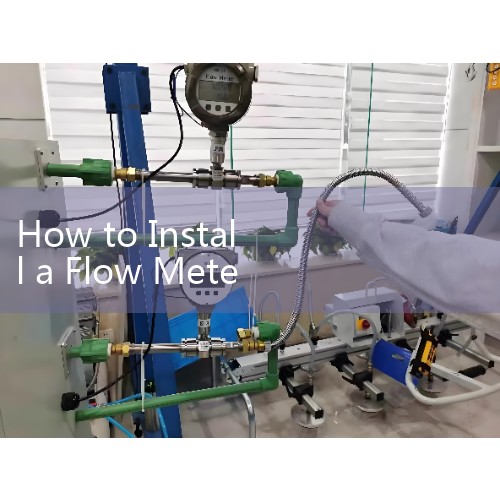
『How to Install a Flow Meter: Installation should follow professional engineering standards, typically requiring the sensor to be placed in a straight run of pipe to avoid turbulence.』Related information(v cone flow meter|rotary gas meter|gallon meter|gear meter|metal tube rotameter|glass tube rotameter|nutating disk meter|transit time ultrasonic flow meter|wedge flow meter|pd meters|hydraulic flow meter|ultrasonic water flow meter|water flow meter|air flow meter|magnetic water flow meter|oxygen flow meter|gas flow meter|argon flow meter|air velocity meter|gasoline flow meter|fuel flow meter|ultrasonic water meter|digital water meter|nitrogen flow meter|solid flow meter|Oxygen tank flow meter|digital water flow meter|diesel fuel flow meter|steam flow meter|02 flow meter|compressed air flow meter|oil flow meter|liquid flow meter)
How to Install a Flow Meter: Straight Run Pipe Requirements and Professional Standards
Quick Answer: Place the flow sensor in a straight run of pipe. For most industrial flow meters, use at least 10D upstream and 5D downstream. Avoid elbows, valves, pumps, and reducers inside that straight run. Send your pipe size DN, fluid type, pressure in bar, temperature in Celsius, and flow range to Silver Automation Instruments for a direct installation recommendation.
Why Straight Run Pipe Matters
Flow meters need stable flow profile. A stable flow profile gives accurate readings. Turbulence from elbows, valves, or pumps distorts the velocity profile. This distortion causes errors in electromagnetic, vortex, and ultrasonic flow meters. The sensor should be placed in a straight run of pipe to avoid turbulence. That rule comes from professional engineering standards such as ISO 5167 and ASME MFC.
In practice, a 90 degree elbow before a DN100 meter can create swirl. Swirl can shift the reading by 2 to 5 percent. Most engineers skip this part during upgrades. We have seen this on customer sites many times. A chemical plant in Malaysia installed a DN80 electromagnetic flow meter after a control valve. The readings fluctuated until the meter was moved 15D downstream of the valve. After that the signal stabilized.
General Installation Steps
First check the process conditions. Write down the pipe size DN, fluid type, pressure bar, temperature Celsius, viscosity cP, conductivity microsiemens per cm, and flow range kg/h or m3/h. Silver Automation Instruments uses this data to confirm the right meter type and liner material.
Second select the straight run length. For liquid lines with a single elbow, use 10D upstream and 5D downstream. For control valves, partial bore valves, or pumps, use 20D to 30D upstream. For gas and steam lines, use 20D upstream or more. Here is the thing: longer straight run costs more pipe but protects measurement accuracy.
Third install the meter in the correct orientation. Electromagnetic flow meters must stay full of liquid. Vertical installation with upward flow is best for slurry and dirty water. Horizontal installation works if the electrodes stay below the pipe centerline for partial air bubbles.
Fourth align the gaskets and flanges. Do not let gaskets protrude into the flow stream. A protruding gasket creates a step change in pipe diameter. That step can produce a false flow signal.
Fifth ground the meter. Electromagnetic flow meters need proper earthing. Use grounding rings in plastic or lined steel pipes. Vortex and Coriolis meters need less earthing but should share plant ground to reduce noise.
Installation by Flow Meter Type
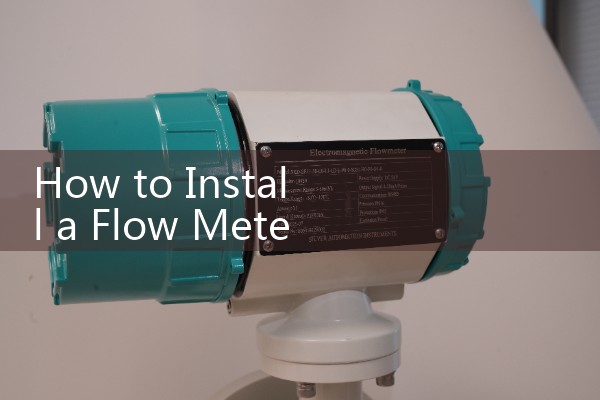
Electromagnetic flow meter: Use a straight run of 10D upstream and 5D downstream for most water and wastewater lines. Keep the meter full of liquid. For a DN150 wastewater line in a water treatment plant in Peru, a Silver Instruments electromagnetic flow meter with PTFE liner and 316L electrodes works well. Do not install the sensor at the highest point of a pipe where air collects.
Coriolis mass flow meter: These meters handle high viscosity fluids like glucose syrup, palm oil, or fuel oil. They do not need long straight run but they do need proper pipe support. Install pipe supports on both sides of the sensor to reduce stress. A food plant in Thailand installed a Silver Instruments Coriolis mass flow meter on a 25 mm line for chocolate syrup. The meter measured mass flow in kg/h and density in kg/m3 without a long straight run.
Ultrasonic flow meter: For clamp-on meters, prepare the pipe surface. Remove rust and paint. Apply coupling compound. Do not install on a pipe with two-phase flow or large gas bubbles. For a DN200 seawater line in a desalination plant in Oman, use a Silver Instruments ultrasonic flow mete
Vortex flow meter: Vortex meters need strict straight run. Place the sensor at least 15D upstream of a control valve and 5D downstream. Use this type for saturated steam, compressed air, or clean liquid. For a steam boiler in a textile factory in Indonesia, a DN50 vortex flow meter from Silver Instruments measured steam flow in kg/h at 10 bar gauge.
Oval gear flow meter: Positive displacement meters do not need long straight run. But they need a strainer or filter upstream. Solids and metal chips can jam the oval gears. Use a 60 mesh strainer for diesel and fuel oil lines. A distributor in Kenya installed a Silver Instruments oval gear flow meter for diesel transfer with a strainer and an air eliminator.
Thermal mass flow meter: Install the probe at the correct insertion depth. The sensor tip must reach the pipe centerline for accurate mass flow. Use a compression fitting or flange mount. For compressed air lines in a bottling plant in Mexico, a Silver Instruments thermal mass flow meter measured standard cubic meters per hour.
Common Installation Mistakes
One mistake is installing a meter right after a pump. Pump impellers generate strong swirl. The velocity profile is unstable. Move the meter downstream by 20D or use a flow straightener.
Another mistake is installing an electromagnetic flow meter in a partially filled pipe. The electrodes lose contact with the liquid. The signal goes to zero or becomes noisy. Install the meter in a low point or a vertical riser.
Using the wrong gasket material is also common. EPDM gaskets in a solvent line will swell and block the pipe. PTFE gaskets handle most chemicals. Silver Automation Instruments can help select gasket and liner compatibility based on your fluid list.
For hazardous areas, check the transmitter certification. Silver Automation Instruments supplies flow meters with 4-20 mA HART output and options for ATEX Zone 1. This matters in oil and gas, solvent recovery, and biogas plants.
FAQ
Q1. What straight run length does a flow meter need?
Use 10D upstream and 5D downstream as a minimum for most liquid meters. Use 20D to 30D upstream after pumps, control valves, or elbows. Gas and steam lines need 20D or more upstream.
Q2. Can a flow meter be installed vertically?
Yes. Vertical installation with upward flow is best for electromagnetic flow meters in dirty water or slurry service. It keeps the pipe full and reduces air pockets.
Q3. Which flow meter type needs the longest straight run?
Vortex flow meters and ultrasonic flow meters need strict straight run. Use at least 15D upstream for vortex and 10D upstream for ultrasonic. Coriolis and oval gear meters need less straight run.
Q4. How do I avoid turbulence before a flow meter?
Move the sensor away from elbows, valves, and pumps. Use a flow straightener if space is limited. A straightener can reduce the required upstream length by half in some cases.
Q5. What information should I send to Silver Automation Instruments for installation advice?
Send your pipe size DN, fluid type, pressure in bar, temperature in Celsius, viscosity cP, conductivity microsiemens per cm, and flow range. Tel: +86-25-68650347. WhatsApp: +86-25-52155837. WeChat: +86 15365082610.
Silver Automation Instruments supplies Coriolis mass flow meters, electromagnetic flow meters, ultrasonic flow meters, vortex flow meters, oval gear flow meters, thermal mass flow meters, pressure transmitters, and paperless recorders. Send your process data to our engineers and get a direct recommendation. We serve end users and distributors in Southeast Asia, Oceania, Latin America, Africa, and the Middle East.
 Hot Product
 Related AD