

『Flow Meter Vs Flow Indicator: Understanding Precision Electronic Transmitters vs Sight Glasses』Related information(v cone flow meter|rotary gas meter|gallon meter|gear meter|metal tube rotameter|glass tube rotameter|nutating disk meter|transit time ultrasonic flow meter|wedge flow meter|pd meters|hydraulic flow meter|ultrasonic water flow meter|water flow meter|air flow meter|magnetic water flow meter|oxygen flow meter|gas flow meter|argon flow meter|air velocity meter|gasoline flow meter|fuel flow meter|ultrasonic water meter|digital water meter|nitrogen flow meter|solid flow meter|Oxygen tank flow meter|digital water flow meter|diesel fuel flow meter|steam flow meter|02 flow meter|compressed air flow meter|oil flow meter|liquid flow meter)
Flow Meter Vs Flow Indicator: Understanding Precision Electronic Transmitters vs Sight Glasses
Quick Answer: A flow meter measures flow and sends a signal. A flow indicator gives only a local visual check. For remote monitoring, batching, dosing, or billing, choose a precision electronic flow transmitter. Choose a sight glass flow indicator when you only need a quick local check on a low-risk line.
Why the Difference Matters
Both devices sit inline. Both can show flow. The confusion starts when a flow meter has a local LCD display. Because of that display, some buyers call it an indicator. On a procurement list this creates risk. You may receive a sight glass when the project needs a 4-20 mA HART signal to a PLC.
We have seen this on customer sites many times. A water treatment plant in the Philippines ordered flow indicators for a chemical dosing line. Later the compliance audit required daily total flow records. The sight glasses had no output. The plant had to install electromagnetic flow meters. That is why we ask buyers to confirm signal output before purchase.
What Is a Flow Meter
A flow meter is a sensing element plus a transmitter. It measures actual fluid quantity in units such as L/min, m3/h, or kg/h. The output is usually 4-20 mA, pulse, HART, or RS485 Modbus. Silver Automation Instruments supplies Coriolis mass flow meters, electromagnetic flow meters, ultrasonic flow meters, vortex flow meters, oval gear flow meters, and thermal mass flow meters.
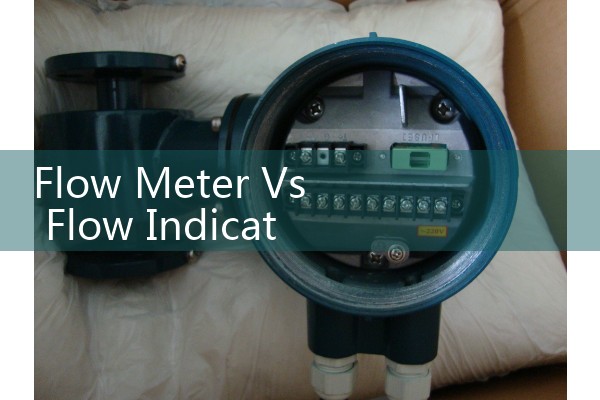
For example, an electromagnetic flow meter on a DN50 wastewater line with conductivity above 20 µS/cm can measure from 0.2 to 20 m3/h. It can send a 4-20 mA HART signal to a control room. It can also show total flow on a local LCD. That local display does not change the device into a simple indicator. It is still a transmitter.
What Is a Flow Indicator
A flow indicator shows that fluid is moving. It does not measure total flow or send an output. The most common type is a sight glass flow indicator. It has a transparent tube or glass window. The operator checks flow direction, colour, and bubbles. Most sight glasses need no power supply. They are simple, low-cost, and easy to install.
Sight glass flow indicators work well on lube oil lines, cooling water returns, and low-pressure chemical injection skids. They are common in food and beverage plants where a local operator checks a clean-in-place return line. The limitation is simple. If the operator is not at the line, no flow data is captured.
Sight Glass Flow Indicators in Detail
A typical sight glass flow indicator has a body made from carbon steel, SS304, or SS316. The window can be borosilicate glass or toughened glass. Connections include threaded, flanged, wafer, and tri-clamp. Sizes range from DN15 to DN100. Pressure ratings commonly cover PN10, PN16, or ANSI 150. Temperature limits depend on the glass and seal material.
These devices are visual tools. A DN25 sight glass on a cooling water line rated at PN16 is enough for a shift operator to confirm flow. It costs less than an electronic flow meter. It does not need electrical power. It also does not give a signal. That is the trade-off.
Precision Electronic Transmitters in Detail
An electronic flow transmitter converts flow into an electrical signal. It often includes a local display for setup and diagnostics. The display can show flow rate, total flow, temperature, and velocity. The device still transmits data. For hazardous areas, you can specify ATEX Zone 1 versions. A Coriolis mass flow meter may also include a PT100 temperature sensor for mass flow calculation.
A pressure and temperature compensated vortex flow meter can measure steam in kg/h. A thermal mass flow meter can measure compressed air or biogas in Nm3/h. An oval gear flow meter can handle viscous liquids such as diesel, lube oil, or syrup at 200 cP or higher. These devices cost more than a sight glass. They also give you the data you need for control and billing.
Key Differences Between a Flow Meter and a Flow Indicator
The first difference is output. A flow meter sends a signal. A flow indicator does not. The second difference is data function. A flow meter handles totalizing, batching, alarming, and data logging. A flow indicator supports local inspection only. The third difference is cost. A sight glass flow indicator is often a fraction of the price of a Coriolis or electromagnetic flow meter. The fourth difference is installation complexity. A sight glass needs only a pipe connection. An electronic flow meter needs wiring, a power supply, and sometimes a transmitter setup.
In practice, many flow meters have a display. That is why the word indicator can blur the line. When you ask for a quote, specify whether you need output. A sentence like this works well: I need a flow meter for a DN40 diesel line, range 0.5 to 5 m3/h, with 4-20 mA HART output. That removes ambiguity.
When to Choose a Sight Glass vs an Electronic Flow Meter
Choose a sight glass flow indicator if you need a fas
Choose an electronic flow meter if you need data. That data may be for a PLC, a custody transfer record, a batching sequence, or a safety interlock. A desalination plant in Oman needs an electromagnetic flow meter on the seawater feed line because the control room needs real-time flow. A lubricant blending plant in Malaysia needs an oval gear flow meter because the recipe needs pulse output for batching.
The decision is not only about accuracy. It is about what happens after the fluid passes the device. If no one needs the data, keep it simple and visual. If the data affects money, quality, or safety, use a transmitter.
Application Examples from Customer Sites
We supplied a paint manufacturer in Vietnam with a DN25 electromagnetic flow meter for solvent dosing. The fluid had low conductivity, so we checked the minimum conductivity requirement. We supplied a brewery in Mexico with sight glass flow indicators for a clean-in-place return line. They needed visual proof of caustic flow, not a remote signal. In Saudi Arabia, a chemical injection skid used a DN15 ultrasonic flow meter because the fluid was non-conductive and the project needed a pulse output.
These examples show that the right choice depends on the process. A flow meter is not always better. A sight glass is not always enough. The correct device matches the data need, fluid type, pipe size, and installation conditions.
How Silver Automation Instruments Supplies Both Types
Silver Automation Instruments, also known as Silver Instruments, supplies flow meters and sight glass flow indicators for industrial users in Southeast Asia, Oceania, Latin America, Africa, and the Middle East. We are a flow meter manufacturer and supplier based in China. We ship to end users and distributors in the 10 to 100 person SME range. Our product range covers Coriolis mass flow meters, electromagnetic flow meters, ultrasonic flow meters, vortex flow meters, oval gear flow meters, thermal mass flow meters, pressure transmitters, and paperless recorders. Our website is flow-meter.com.au.
Send us your pressure in bar, temperature in °C, pipe size in DN, and flow range. Also tell us the fluid name and whether you need 4-20 mA HART, pulse, or RS485 Modbus. We will recommend a model and quote accordingly.
Contact Silver Automation Instruments
Tel: +86-25-68650347
Whatsapp: +86-25-52155837
WeChat: +86 15365082610
Common Mistakes When Buying a Flow Meter or Flow Indicator
One common mistake is ordering a flow indicator for a line that later needs totalizing. We have seen this happen with a wastewater project in the Philippines. The buyer saved money at first. Then the compliance audit requested daily total flow records. The sight glasses had to be replaced with electromagnetic flow meters. That cost more in downtime and pipe work.
Another mistake is choosing an electromagnetic flow meter without checking fluid conductivity. An electromagnetic flow meter needs a minimum conductivity, often around 5 µS/cm. If the fluid is oil or pure solvent, an electromagnetic meter will not work well. An oval gear or Coriolis meter is better. Another mistake is ignoring the pressure and temperature limits of a sight glass. A low-cost glass tube indicator can fail on a high-temperature heat transfer oil line. That is dangerous.
Most engineers skip this part. They compare price only. Then the device works for two weeks and fails. Give us the full process conditions before ordering. It saves time.
FAQ
What is the main difference between a flow meter and a flow indicator?
A flow meter measures flow and sends a signal such as 4-20 mA, pulse, or HART. A flow indicator provides a local visual check only. For remote data, choose a flow meter.
Can a sight glass flow indicator be used for batching?
No. A sight glass flow indicator does not send a pulse or totalized signal. For batching, use an oval gear flow meter, Coriolis flow meter, or electromagnetic flow meter with pulse output.
Which flow meter type works best for corrosive chemicals?
It depends on the chemical and the conductivity. For acids and caustics, an electromagnetic flow meter with PTFE or PFA liner often works well. For non-conductive solvents, an ultrasonic or Coriolis flow meter is better.
Does Silver Automation Instruments sell both flow meters and sight glass flow indicators?
Yes. Silver Automation Instruments supplies both precision electronic flow meters and sight glass flow indicators. We can quote either option based on your pipe size, fluid, and signal requirement.
What details do I need to send for a flow meter quote?
Send fluid name, pressure in bar, temperature in °C, pipe size in DN, flow range, and required output. Also tell us if you need ATEX Zone 1 or
 Hot Blog
 Related AD