

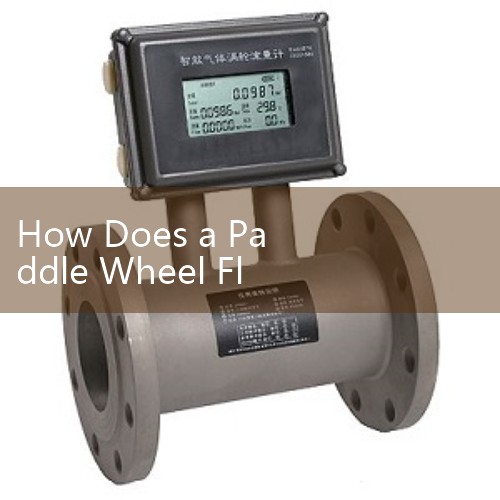
『How Does a Paddle Wheel Flow Meter Work: Uses an inserted spinning wheel with embedded magnets to send raw pulse frequencies to a digital display.』Related information(v cone flow meter|rotary gas meter|gallon meter|gear meter|metal tube rotameter|glass tube rotameter|nutating disk meter|transit time ultrasonic flow meter|wedge flow meter|pd meters|hydraulic flow meter|ultrasonic water flow meter|water flow meter|air flow meter|magnetic water flow meter|oxygen flow meter|gas flow meter|argon flow meter|air velocity meter|gasoline flow meter|fuel flow meter|ultrasonic water meter|digital water meter|nitrogen flow meter|solid flow meter|Oxygen tank flow meter|digital water flow meter|diesel fuel flow meter|steam flow meter|02 flow meter|compressed air flow meter|oil flow meter|liquid flow meter)
How Does a Paddle Wheel Flow Meter Work
Quick Answer: A paddle wheel flow meter uses an inserted spinning wheel with embedded magnets. As liquid flows, the wheel rotates and each blade sends a raw pulse to a digital display or PLC. The pulse frequency is proportional to flow velocity. The display converts that frequency into flow rate and total flow.
What Is a Paddle Wheel Flow Meter
A paddle wheel flow meter is an insertion style instrument. It has a small rotor with blades. Magnets are embedded in the rotor body. A sensor mounted outside the pipe detects each magnet pass. That detection creates a raw electric pulse. The pulse generation itself does not require external power. The digital display or transmitter needs power to process the signal.
The body material can be polypropylene, PVDF, or stainless steel. Typical sizes range from DN15 to DN400. A DN50 polypropylene unit often covers 0.5 m³/h to 18 m³/h depending on the K-factor. Plastic bodies commonly handle pressures up to 10 bar. Stainless steel bodies can handle higher pressure and temperature. This makes the meter useful for clean water, RO permeate, cooling water, and many thin chemicals.
How the Raw Pulse Signal Works
The spinning wheel is the core. When liquid moves through the pipe, the flow pushes the paddle blades. Each blade passes the sensor. The embedded magnet creates a small voltage pulse. A digital display counts the pulses. The pulse rate in Hz tells the display how fast the liquid is moving. Total flow comes from total pulse count.
Every meter has a K-factor. This is the number of pulses per liter or gallon. For example a DN80 polypropylene meter might have a K-factor near 12 pulses per liter. A DN25 unit might have 50 pulses per liter. The digital display divides the incoming frequency by the K-factor. That gives flow rate in L/min or m³/h.
In practice many plants use a PLC instead of a digital display. The raw pulse feeds a digital input card. The PLC stores the K-factor in a function block. Some plants wire the pulse output to a batching controller for filling operations. Here is the thing. The pulse is raw. It is not conditioned. The display or PLC does the heavy lifting.
Where Paddle Wheel Flow Meters Fit
These meters work best with clean low viscosity liquids. Water, demineralized water, reverse osmosis permeate, and cooling water are common. They also work on mild chemicals if the body material is PVDF or stainless steel. Last year a customer in Vietnam asked us for a DN50 PVDF paddle wheel meter on a solvent batching line. The liquid is thin and free of particles. The meter sends raw pulses to a digital batch controller.
Do not use a paddle wheel flow meter on slurries, heavy grease, or liquids with fibers. Particles can stop the wheel. High viscosity above 50 cP reduces accuracy. Gas bubbles also cause errors because the paddle wheel measures velocity in a liquid stream only.
For dirty water or wastewater a magnetic flow meter is a better fit. For diesel and lube oil an oval gear flow meter works well. Silver Instruments supplies both types for applications where paddle wheel meters are not suitable.
Installation and Straight Pipe Requirements
The meter inserts into a fitting on the pipe. A common connection is a 1.5 inch NPT or BSP saddle. The insertion depth must match the pipe diameter. Most engineers skip the insertion depth check. That causes more errors than any other factor. If the depth is wrong the paddle wheel sits too high or too low. That changes the K-factor and accuracy.
Straight pipe matters. A good rule is 10 pipe diameters upstream and 5 downstream. For a DN100 line that means 1 meter of straight run before the meter and 0.5 meter after. Valves, elbows, and pumps upstream cause swirl. Swirl changes the velocity profile. The meter then reads high or low.
The pipe must be full at all times. Mount the meter horizontally or vertically with upward flow. Do not install it at a low point where solids settle. Do not install it
Paddle Wheel vs Other Flow Meter Types
A paddle wheel flow meter costs less than a full bore electromagnetic flow meter. On a DN150 line a paddle wheel meter may be 50 to 70 percent cheaper. Installation is also easier because you do not cut the pipe. You weld a saddle or thread a tee. This is why many water treatment and HVAC contractors choose paddle wheel meters for large pipes.
An electromagnetic flow meter works on conductive liquids but not on pure water or oil. A paddle wheel meter works on most clean liquids regardless of conductivity. Ultrasonic clamp on meters work non invasively but cost more. An oval gear meter gives high accuracy on oil and diesel but causes a small pressure drop.
Output Signal Options from Silver Instruments
Our paddle wheel flow meters can output raw pulse, frequency, 4-20 mA, or RS485 Modbus. The simplest version sends a raw pulse directly to a digital display. The display converts the frequency to flow rate and total. A blind transmitter version can send 4-20 mA to a PLC or SCADA. Some models include two outputs at once, such as pulse plus 4-20 mA.
We also supply a local digital display with a flow totalizer. The display can be panel mounted or field mounted. For batch control we recommend the pulse output to a batching controller. For remote monitoring we recommend RS485 Modbus with a Silver Instruments paperless recorder.
How to Select a Paddle Wheel Flow Meter
Tell us four things: liquid type, pipe size in DN, flow range in m³/h or L/min, and process temperature in °C. We will select the right body material, K-factor, and output. If the liquid is also conductive and contains particles, we may suggest an electromagnetic flow meter instead. If the liquid is clean but pipe size is above DN200, we may suggest an insertion style magnetic meter or a clamp on ultrasonic.
Silver Instruments has supplied paddle wheel flow meters to customers in the Philippines, Indonesia, Nigeria, Mexico, and the UAE. Our technical team responds within 24 hours on working days.
Send your pipe size, flow range, liquid, temperature, and pressure to Tel: +86-25-68650347, Whatsapp: +86-25-52155837, or WeChat: +86 15365082610.
FAQ
What liquids work with a paddle wheel flow meter? Clean low viscosity liquids such as water, demineralized water, cooling water, and thin chemicals. Avoid slurries, oils above 50 cP, and liquids with fibers or particles.
What is the accuracy of a paddle wheel flow meter? Typical accuracy is plus or minus 1.5 percent of full scale. Some models reach 1 percent of reading after field calibration. Accuracy depends on straight pipe, insertion depth, and liquid conditions.
Can I use a paddle wheel flow meter on a partially filled pipe? No. The pipe must be full. Air bubbles and partially filled pipes cause fast pulses and large errors. Use a full pipe installation with downward flow avoided.
What output signals does a paddle wheel flow meter provide? Raw pulse frequency is standard. Options include 4-20 mA, pulse, and RS485 Modbus. A digital display can accept the raw pulse and show flow rate and total flow.
How do I choose the right K-factor? The K-factor comes from the factory based on pipe size and insertion depth. Do not change it unless you do a field calibration. Tell us your exact pipe ID and we will program the digital display or transmitter before shipment.
Silver Automation Instruments supplies paddle wheel flow meters with local digital displays, blind transmitters, and full batching packages. Send your process data and we will reply with a quotation within one working day.
 Hot Product
 Related AD